
Why Add a Motor to a Hunting Kayak
Kayaks are meant to be paddled. So why would you want to add a motor to a hunting kayak? If you are looking for a mud motor for your kayak, there is a good chance you have already spent some time hunting from one and know the answer. But for someone who is getting ready for their first season, here are a few reasons why adding a motor starts to make sense.
Paddling Performance
Kayaks are easy to paddle. They are designed to be paddled. But when you start looking at hunting kayaks, they prioritize something besides paddling performance. Stability. No one wants to get dumped out of their kayak while taking an overhead shot at an awkward angle. So to increase stability, hunting kayaks are typically much wider than recreational kayaks.
That wider design provides better stability, higher weight capacity, and more room for hunting gear. The tradeoff is that they become more difficult to paddle. They don't slice through the water as efficiently and are generally slower than a traditional recreational kayak. Add in a kayak duck blind and that can make it even more difficult.
Wind and Heavy Gear
If you have ever paddled a loaded down kayak across an open stretch of water on a windy day, you know how difficult that can be. When your gear is not perfectly balanced, the kayak can pull to one side. Add in a crosswind and you spend more time fighting to keep the kayak on course than you do making any forward progress.
I experienced this firsthand with my Carstens Pintail while duck hunting. The Pintail is closer to a small boat than a traditional kayak, and after fighting the wind during a long paddle back, I was seriously considering getting out and dragging it instead.
That was my last hunt before I added a mud motor to my setup. I used a traditional gas mud motor and that setup became too heavy and awkward to load into the back of my truck. I ended up using a trailer and it was several more seasons before I switched to an electric mud motor on a different kayak setup.
Electric vs. Gas Mud Motor for Kayak Hunting
So what makes electric mud motors better for kayaks than gas mud motors? There are definitely pros and cons to each type of setup, but when it comes to size and weight, electric wins out. That doesn’t mean it’s the best fit for every situation though.
Gas Mud Motors: More Power, More Weight
The Problem with Gas on a Kayak
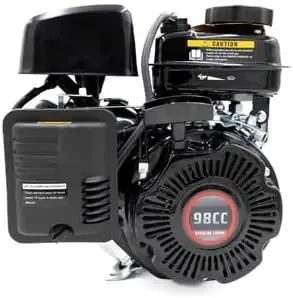
I've used a small gas mud motor on both a Carstens Pintail and an Ascend H12. On the Ascend, the added weight was simply too much. The Pintail handled it much better, but it still made loading the kayak into the back of my truck a chore.
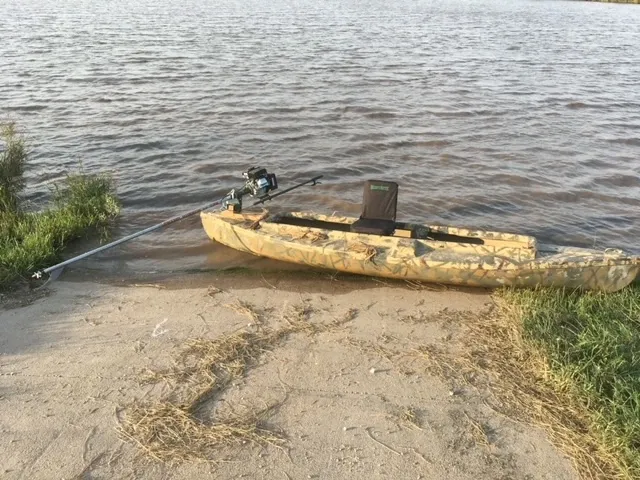
A small 3 HP gas engine weighs close to 30 lbs once you add gas and oil. Pair that with a mini mud motor kit weighing another 25–30 lbs, and you've added more than 50 lbs for a fairly small engine. Add in 70-80 lbs for the kayak itself and it becomes a heavy setup even before you add gear, decoys, etc.
Affiliate Disclaimer: We are a participant in the Amazon Services LLC Associates Program and other affiliate programs. We may earn a commission at no cost to you if you purchase through links on this page.
Noise and Maintenance
Gas mud motors are loud and while routine maintenance isn’t difficult, you still have to deal with oil changes, fuel, carburetors, etc. If you have ever tried pull-starting a gas engine on a 20 degree morning, you know that's another disadvantage.
Where Gas Still Wins
Despite those drawbacks, gas mud motors have plenty of advantages. They offer longer runtime, can be refueled in minutes, and generally produce more power than an electric setup. For larger duck boats or hunters covering long distances, those benefits often outweigh the extra weight. However, for kayaks where portability and weight are key, the tradeoffs might not be worth it.
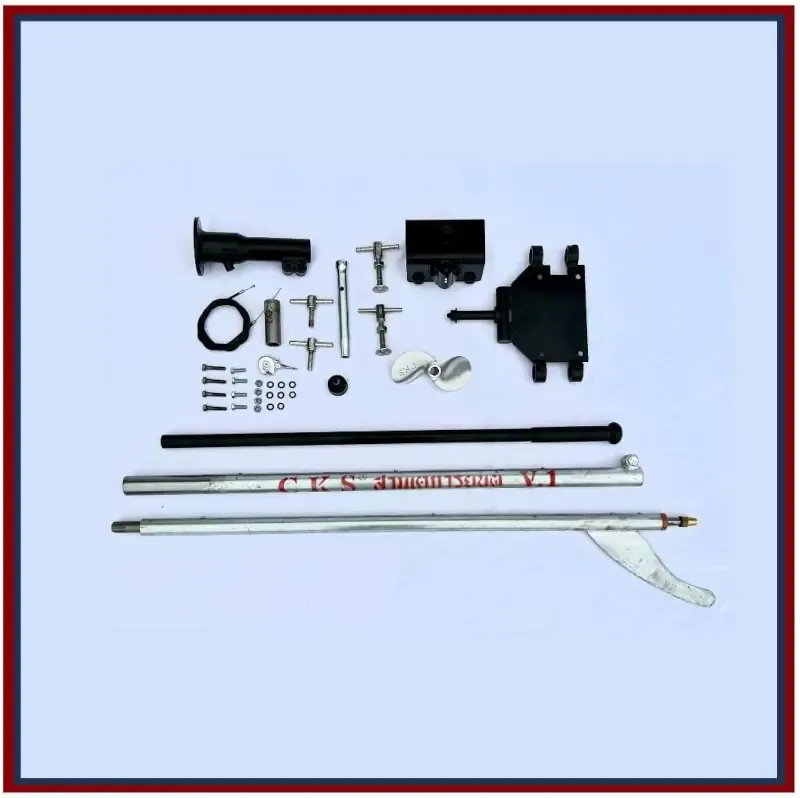
A long tail mud motor kit makes more sense when you have a larger boat that can handle the extra weight of a setup like this.
Check PricePros
- Higher power
- Longer range and easier refueling
Cons
- Extra weight makes your kayak less portable
- Noisy and higher maintenance
Electric Mud Motors - Built for Kayak Hunters
The Biggest Advantage: Keeping Your Kayak Lightweight
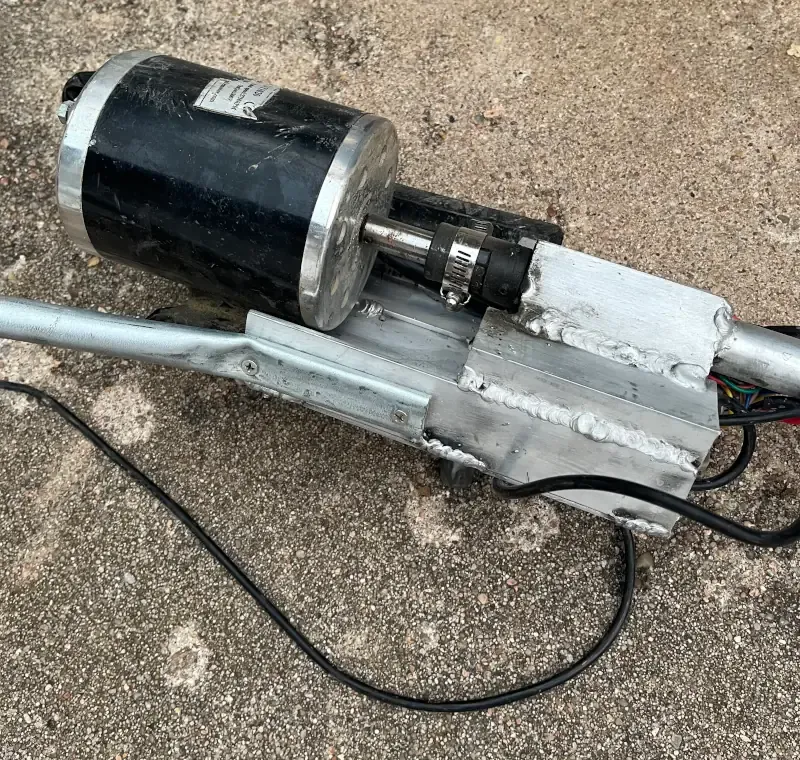
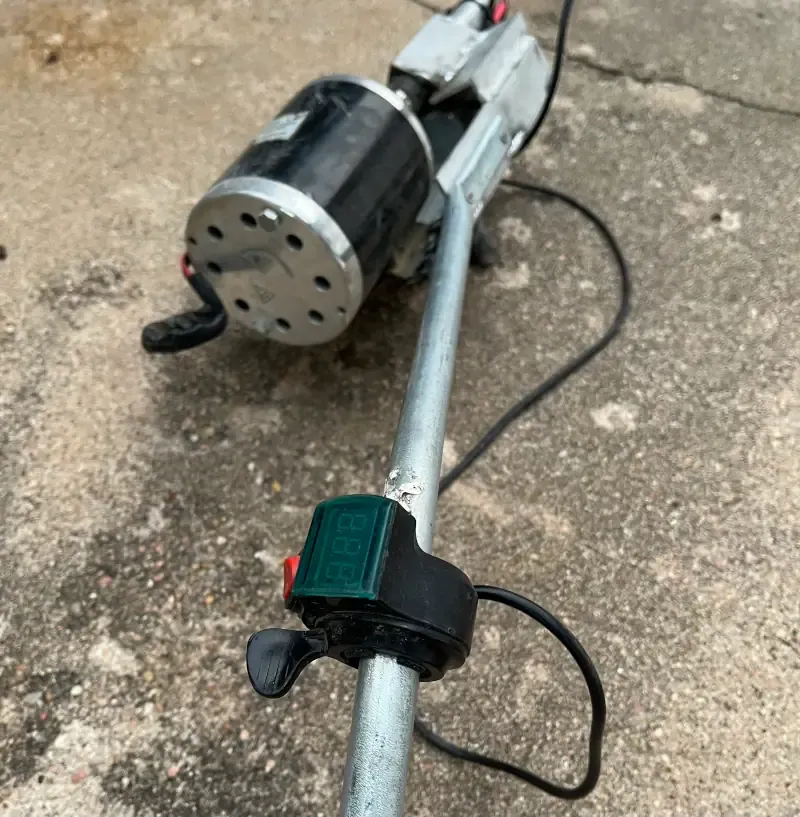
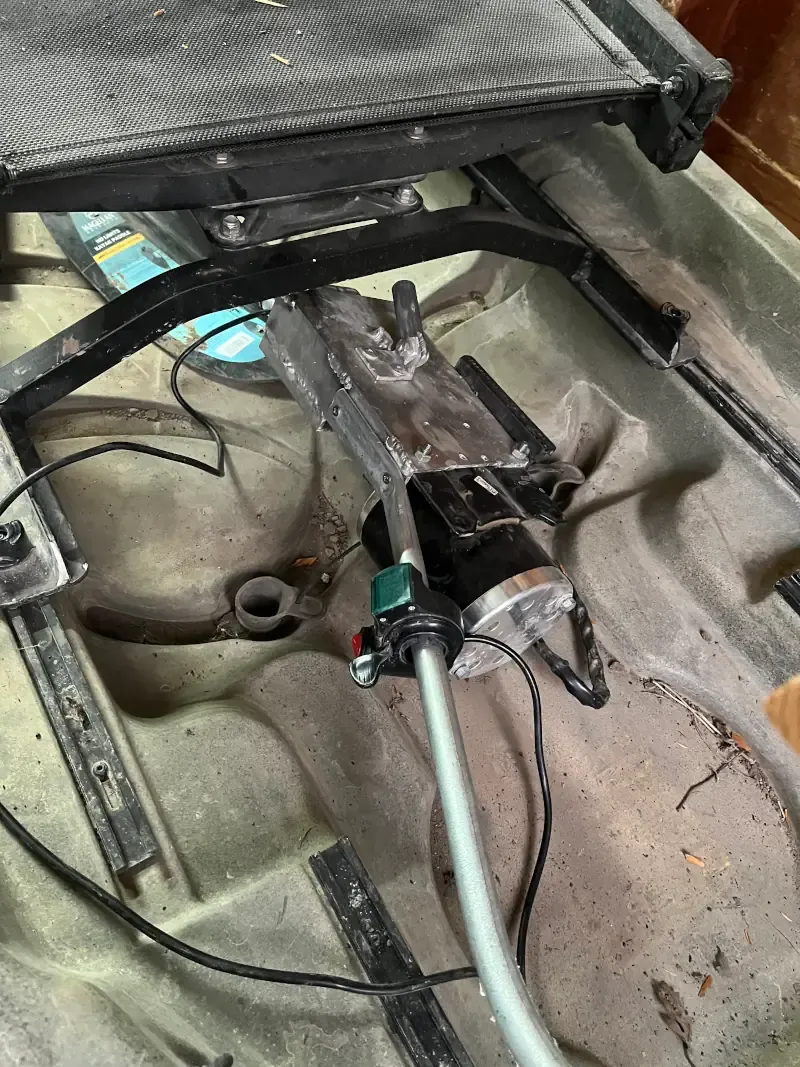
An electric motor weighs 10-15 lbs and is about a third of the size of a gas engine. This makes a huge difference in how easy it is to take the motor on and off the kayak. My current electric mud motor setup is made out of aluminum and weighs around 25 lbs. I still take the motor off the transom when I load it into the truck. But it’s so lightweight that I just toss the motor into the kayak before I put the whole setup into the truck.
Quiet, Simple, and Easy to Maintain
One of my favorite things about my electric mud motor is the noise. It’s not silent, but compared to a gas mud motor it might as well be. I love moving through an area almost noiselessly and slipping into an area undetected.
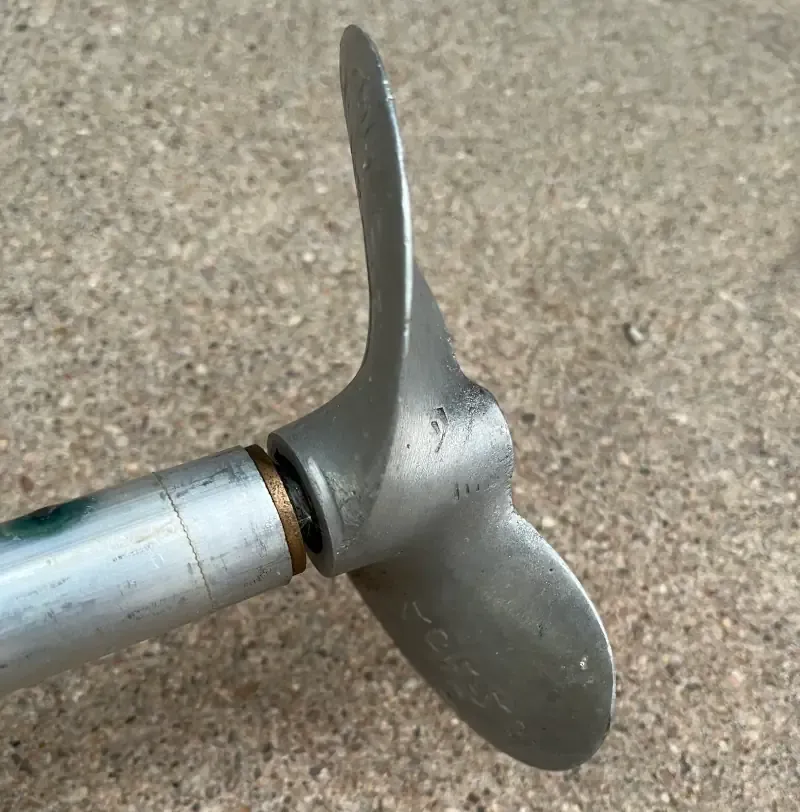
There is basically no maintenance on my electric mud motor. Add a little grease to the shaft, charge up the batteries, and it is good to go. But there are some downsides to batteries. The obvious big one is battery power and range. You can’t top off your battery halfway to your hunting spot (although I do use swappable battery packs for extended range). Batteries are also significantly more expensive than gas upfront.
Why People Choose Electric
Besides weight and noise, another advantage to electric is the instant on/off. With gas, the motor is idling even if not in use. With electric, the prop isn’t spinning unless I’m pushing the throttle for power. And perhaps one of the best parts about electric (that I’m not taking advantage of yet) is the reversibility. My setup only goes forward, but a lot of controllers let the motor swap directions with a simple switch.
And finally, running the electric mud motor in cold weather was so much nicer than gas. One hunt my prop froze stuck and I had to break it free by hand to get things started, but other than that, I have no issues with the cold. Cold temperatures can draw down the batteries a little faster, but I haven’t noticed significant decreases in range during cold weather.
Pros
- Quiet and lightweight
- Low maintenance and reliable operation in cold weather
Cons
- Less power and batteries are more expensive upfront
- Less range than gas motor
What's Best?
If your goal is maximum speed, power, and maximum distance, a gas mud motor is hard to beat. But if you chose a kayak because it's lightweight, portable, and easy to transport, I think an electric mud motor complements those strengths much better.
Mud Motor vs. Trolling Motor for Kayak
When it comes to electric power for a kayak, the most obvious solution is a trolling motor. There are plenty of options for trolling motors for kayaks. One with an extended tiller would have mounted up nicely to my NuCanoe F10, but a trolling motor is designed for open water and longer range. However, a hunting kayak is exposed to a much wider variety of conditions.
I spend a lot of time on my kayak in rivers and creeks, navigating log jams, debris, and shallow water. The fixed lower unit and fully submerged propeller of a traditional trolling motor make these situations much more difficult than they are with a mud motor.
A mud motor is perfect for shallow water. I run my kayak into the bank to get out at my hunting spot and the prop hangs back in 4 inches of water pushing me forward while the front of the kayak is on dry land. Any small electric motor isn’t going to have enough power to push through real shallow mud, but if there is enough water to float the kayak, a mud motor will get you to your spot.
The long shaft provides a lot of flexibility, and the prop doesn't have to be fully submerged to keep producing thrust. That's especially helpful when launching on a rocky shoreline. I actually sheared off my motor coupling after striking rocks during a launch, so now I intentionally keep the prop only partly submerged whenever I'm around obstacles.
If most of your time is spent fishing open lakes, a trolling motor is probably the simpler and less expensive option. But if you're hunting in shallow marshes, rivers, flooded timber, and muddy backwaters, I think a mud motor is the better tool. Being able to lift the prop over logs, skim through inches of water, and launch from rough shorelines has been one of the biggest advantages of my setup.
DIY Electric Mud Motor for Hunting Kayak
Homemade Build
I knew what I wanted, but it didn't exist. At least, it didn't when I started this project. Backwater has since released a 7 HP electric mud motor, so hopefully we'll see more electric options in the future. When I first started kayak hunting, there wasn’t a commercially available kayak duck blind and I ended up building my own custom layout blind for a Pelican 100. So when I couldn’t find the right mud motor for my kayak, I figured I would build it myself.
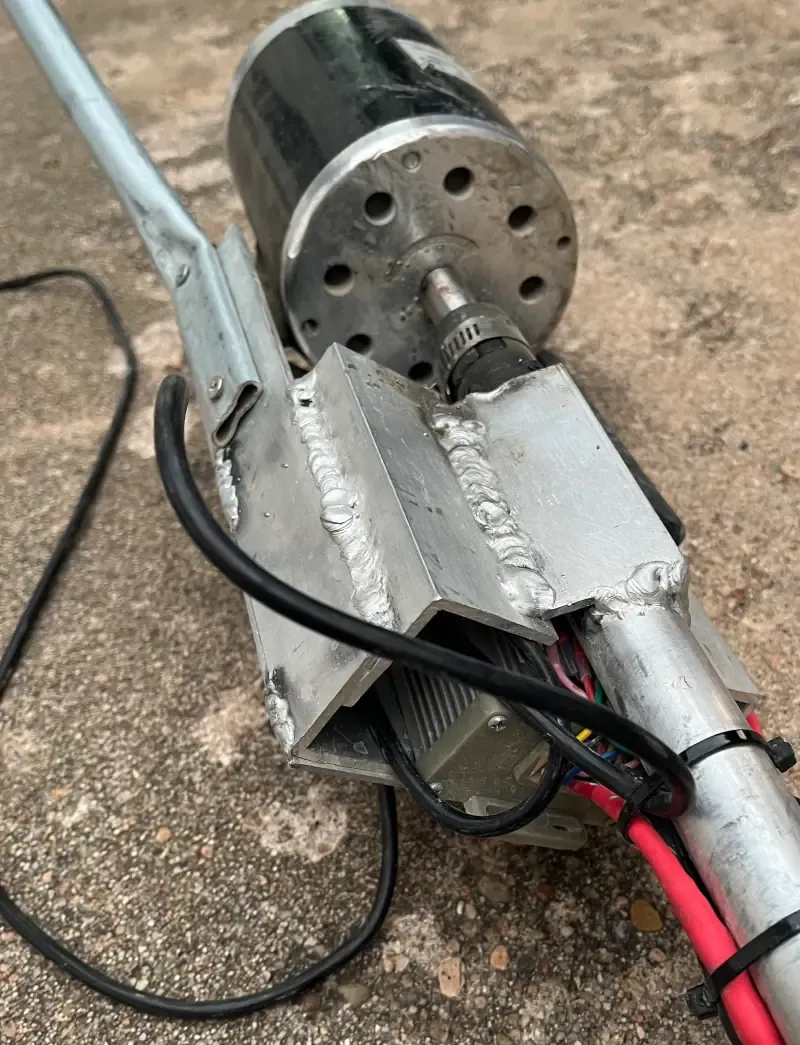
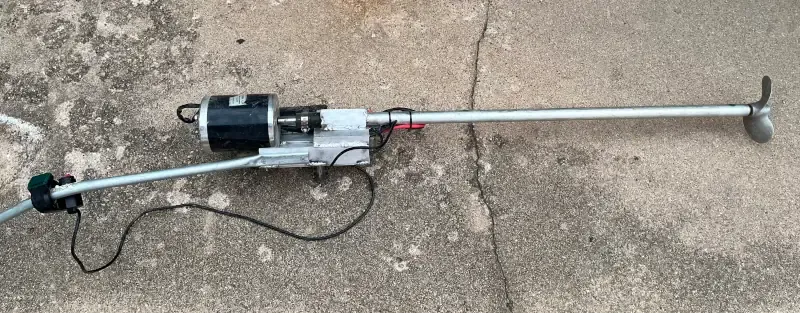
The cool thing about building your own electric mud motor is that you can tailor it to fit your exact situation. For this build, I had a few constraints. It needed to be as light as possible, so I built it out of aluminum. I also wanted to reuse my existing batteries. I already had 40V Ryobi batteries for yard tools like a mower and trimmer, so I needed something that would work with that power source. I also wanted the entire thing to be removable from the kayak easily.
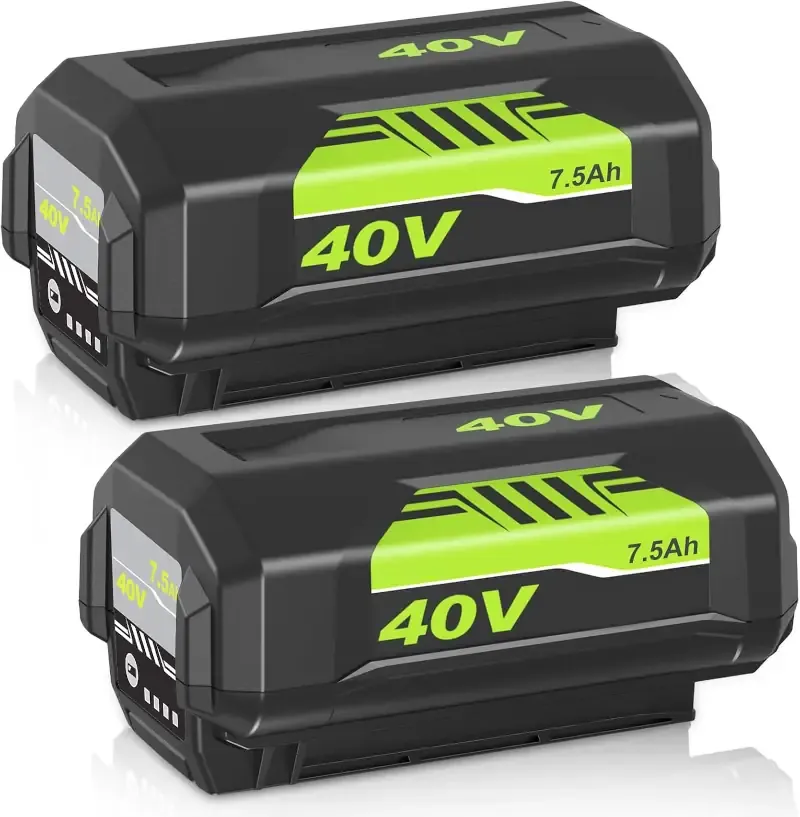
These are knock-off batteries and the amps are over estimated but a 2 pack should provide over a mile of range.
Check Price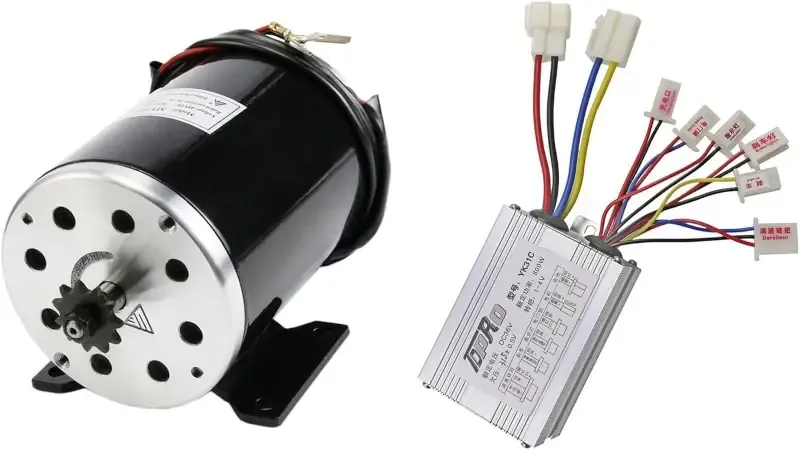
36V 800W electric motor with matched speed controller to drive a DIY mud motor setup.
Check Price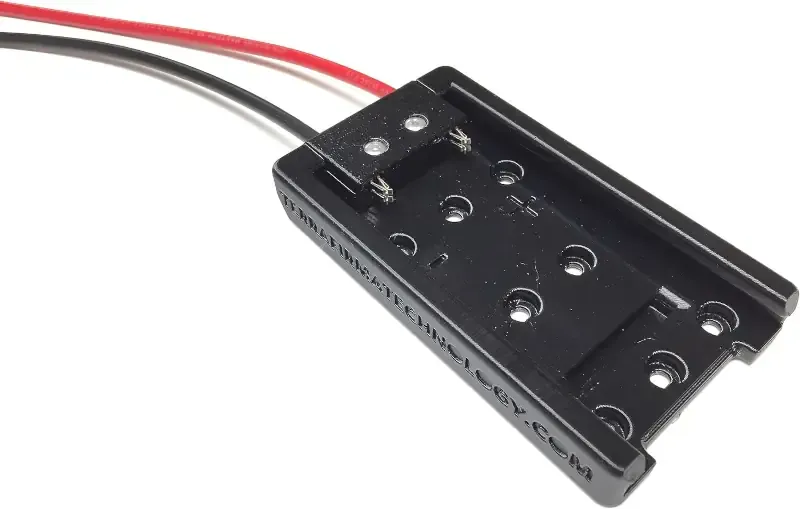
A battery adapter that exposes flying leads for direct connection to the motor controller.
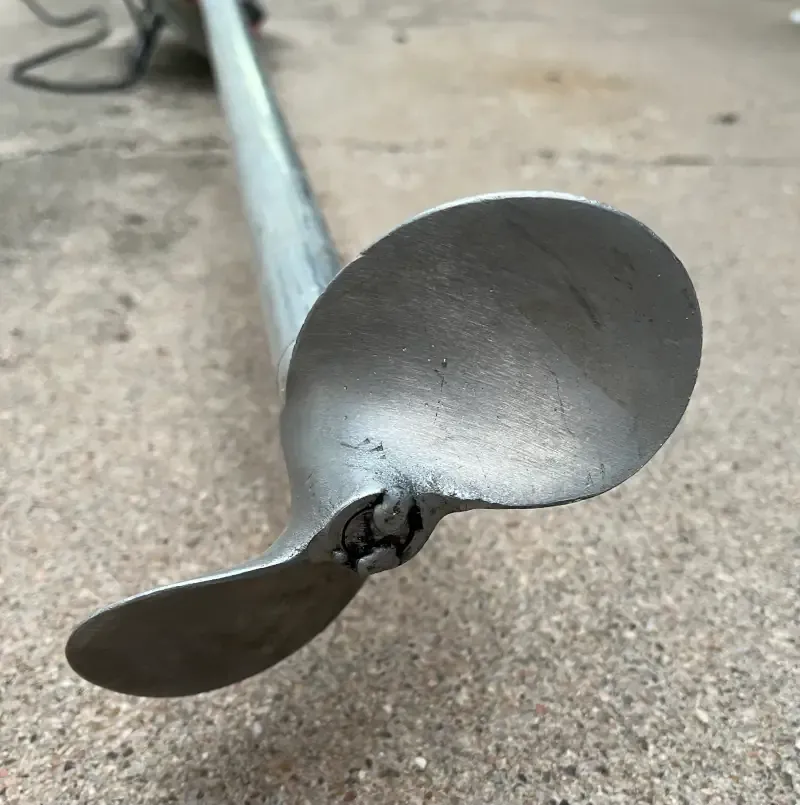
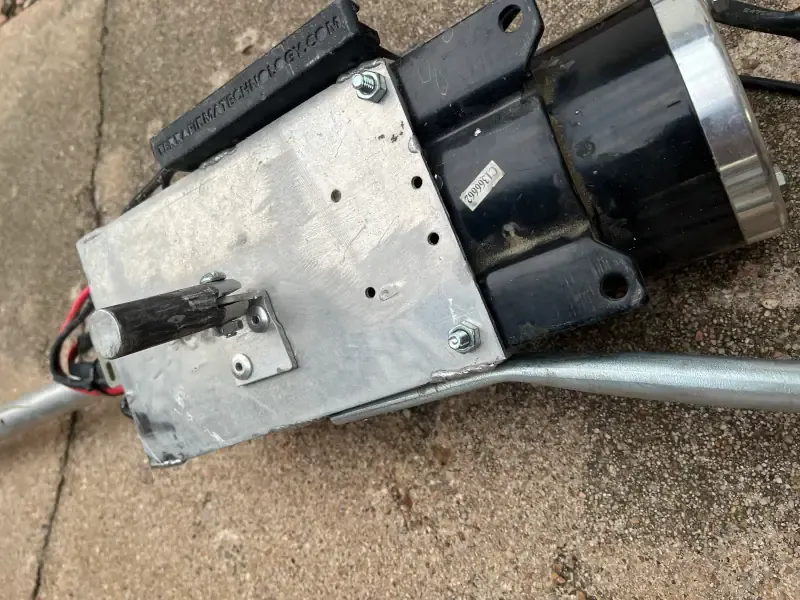
Check PriceThere are a lot of different options for motors, but I found an 800W 36V DC brushless motor and controller that seemed to be a good fit. It runs close to 3000 RPM which is a good range for a standard mud motor prop. With the components picked out, I did a test run before building out my own mud motor. I initially used a Swamp Runner Mini Kit. I had an adapter made to go from the electric motor up to the 5/8th mud motor shaft.
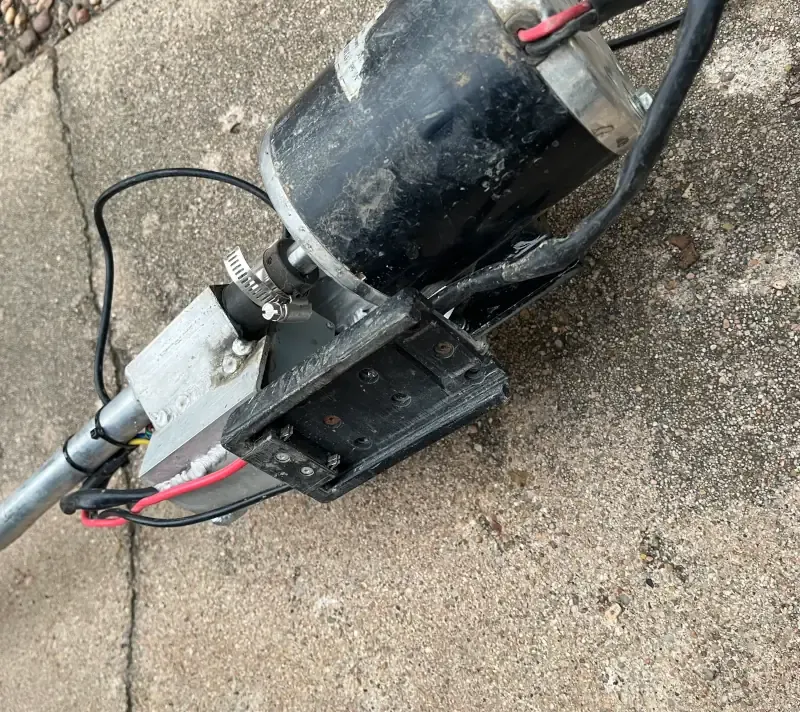
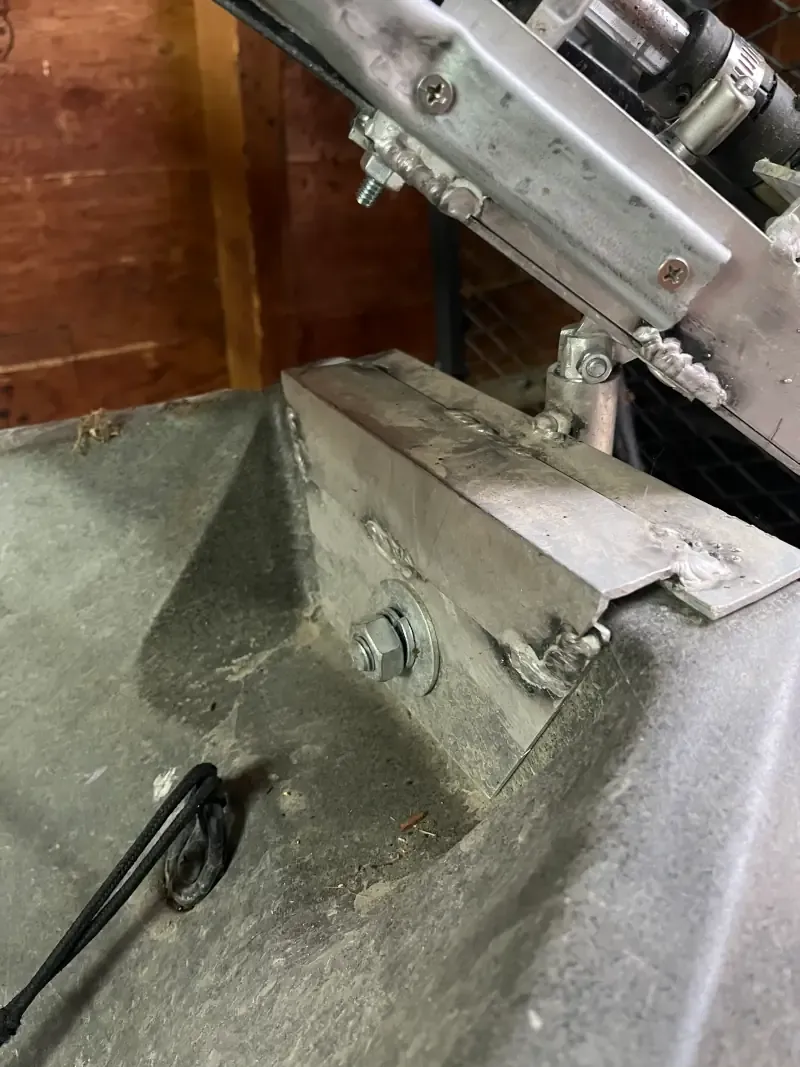
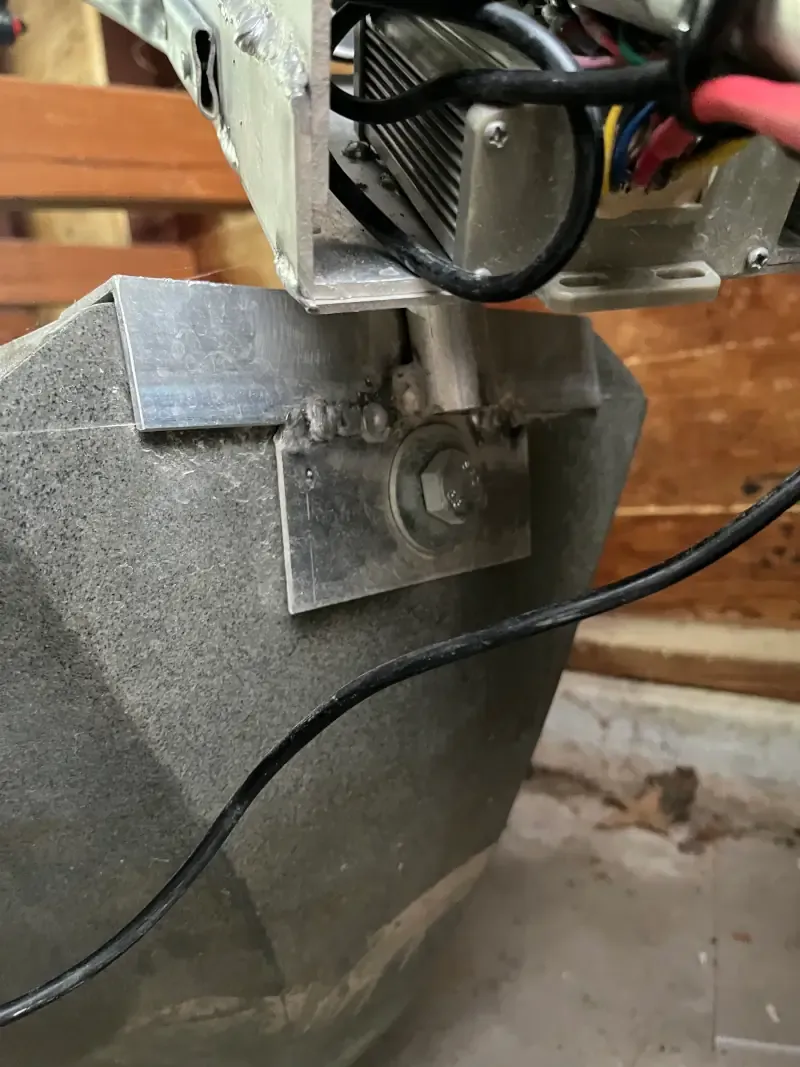
After proving the motor and batteries could handle the load without overheating, I went on to build a homemade electric mud motor. This design had some flaws. The connection of the motor to the shaft was a weak point and it eventually sheared off. I replaced it with a ⅝-inch to ½-inch motor coupler which has been a much stronger setup. Also, the pivot point to the pin that went into the transom was weak and broke off, but I strengthened that with some additional angle and it has held up well since.
Results
After several seasons of use, I still absolutely love this electric mud motor. It is way better than paddling, and it’s extremely lightweight and compact. I use it with my 10 ft NuCanoe and that has become my go-to setup when I am using a kayak for transportation to my hunting spot.
With two 40V 4 Ah batteries I get over 1 mile of range fairly comfortably. I do notice a slight decrease in speed as the battery drains and the voltage starts to pull down to 36V. I like to take two batteries with me for most of my hunting spots. If I am going a half mile into a spot, I will usually swap the battery out before the trip back so I can cover water a little faster. Swapping the batteries around the 30-50% range also makes me a little less worried about running out of power halfway.
This setup has been extremely reliable, however, I can’t stop myself from bringing a paddle as a backup. I’m convinced that the first time I hunt without a paddle, something will break and I’ll be stuck a half mile from the launch. Really though, the weak point is not the motor or battery or controller, it’s more my mechanical setup.
What I Would Change
If I were to build another electric mud motor for my hunting kayak, the first thing I would change is the motor controller. I would get one that has a connection for swapping motor direction. Since I run my kayak front first into the shoreline when I am at my hunting spot, it would be really nice to have reverse to just back out instead of spinning the kayak around manually.
I would also stick with a fixed coupler between the motor and the shaft. But I wouldn’t make the shaft out of aluminum. It’s nice that it is lightweight, but a stainless steel shaft could be smaller in diameter and wouldn’t really add much weight. My aluminum shaft isn’t perfectly straight which adds a bit of vibration and noise.
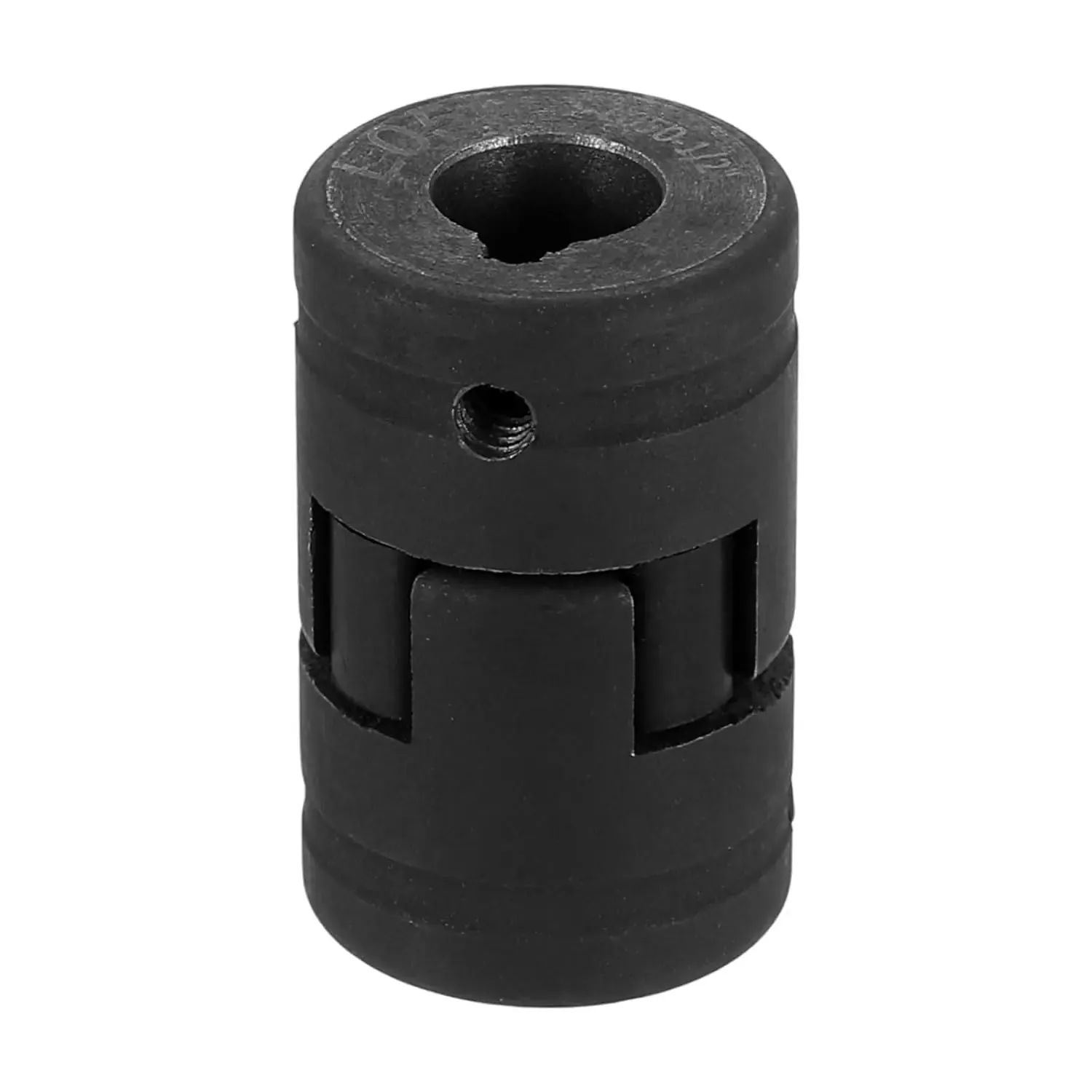
This style of coupler allows a small amount of flex between the motor and the shaft but it's not as forgiving as a true flexible coupling.
Check PriceOne thing I have gone back and forth on is power. I can’t say that I would complain about a higher power setup. My current motor has no problem running at full RPM, but I think going to a larger propeller would put enough extra load on the motor that overheating could become an issue.
There are plenty of higher-power options, like a 72V 3000W motor and controller, that would be a lot of fun on a kayak. But I keep coming back to the hull design on most hunting kayaks. They typically use a displacement hull rather than a planing hull. Instead of riding on top of the water like a bass boat, they push through it. As a displacement hull gets faster, the amount of power required to gain even a little more speed increases dramatically. So doubling the power doesn't result in doubling the speed.
For that reason, I haven't felt the need to build a more powerful setup. My current motor is faster and easier than paddling, and for the way I hunt, I’d rather keep the weight, battery size, and cost under control. But if someone builds a higher-powered version, I'd love to see how it performs.
High Power Electric Mud Motor for Boats
Since building my 800W setup I have been looking for people running higher power electric mud motors. I recently came across another hunter who is building a high performance electric mud motor for use on larger boats. After seeing some of the videos of it running, I was pretty impressed.
They call it the Whisper. It’s 23hp peak and 8hp continuous. They can get around 7-9 miles of range with a 48v 160ah battery and about 18mph.


He is considering producing these commercially, but they are still in the testing phase. They are intentionally pushing the motor to its limits, testing durability, and trying to find weak points before turning it into a production product.
I'll be keeping an eye on the project and will add a link here if they bring it to market.
Is an Electric Mud Motor Worth It for a Hunting Kayak?
It depends on your hunting situation, but for almost all of my hunts from my kayak, having an electric mud motor has been a huge improvement. It gives me the ability to cover more water, deal with wind, and access shallow areas without giving up the portability that made me choose a kayak in the first place.
Building one yourself does take some time and requires some trial and error, but the end result has been worth it for me. If you have questions about building your own electric mud motor, feel free to reach out through our Facebook page or contact page.
If you are building an electric mud motor, the motor is only one part of the setup. How you hide and hunt from the kayak is just as important. Check out my guide on building a kayak duck blind to see how I set up my kayak for hunting.