
The 6 Best Turkey Hunting Calls
| If you... | Best Choice | Why |
|---|---|---|
| Are buying your first turkey call | H.S. Strut Combo Kit | Includes multiple call types so you can learn what works best for you. |
| Need to call long distances | Lynch's Fool Proof | Versatile call that can be heard from a distance and on windy days. |
| Want realistic, softer calling | Woodhaven Cherry Classic | Slate calls are great for those still, calm mornings. |
| Want hands-free calling | H.S. Strut Fearsome 4 | Ideal once you've learned the basics of diaphragm calls. Has volume and versatility. |
| Hunt with kids or beginners | H.S. Strut Push Button Yelper | Produces convincing yelps with almost no learning curve. |
| Need to locate gobblers | H.S. Strut Hammerin' Crow | A loud locator call that can trigger shock gobbles before daylight. |
Affiliate Disclaimer: We are a participant in the Amazon Services LLC Associates Program and other affiliate programs. We may earn a commission at no cost to you if you purchase through links on this page.
My Favorite Turkey Calls Reviewed:
No matter what turkey hunting call you choose, practicing and learning to read how the birds respond will be important. If you are a beginner turkey hunter, I recommend you get a basic pot call and box call. Both calls can be found at a cheap price point, and you will find yourself in hunting situations where you need both.
When it comes to the best turkey hunting calls, there is no right answer. A lot of it comes down to personal preference. However, if you are just getting started or are looking to add a new type of call to your gear list, these are the best turkey hunting calls that I recommend.
-
Best Turkey Call for Beginners: H.S. Strut Combo Kit
-
Best Box Call: Lynch's Fool Proof
-
Best Slate Call: Woodhaven Cherry Classic
-
Best Mouth Call: H.S. Strut Fearsome 4
-
Best Push Call: H.S. Strut Push Button Yelper
-
Best Locator Call: H.S. Strut Hammerin' Crow
Best Turkey Call for Beginners: H.S. Strut Combo Kit
The H.S. Strut combo kit is a great place to start if you don’t have any turkey calls. The highlight of this combo is the Lil’ Deuce glass pot call. This is the same pot call that I have been using since I was 16 and have used to harvest almost every single turkey I have ever shot.
You can buy a similar glass pot call separately if you want just the pot call, but for a beginner, I know the urge to experiment with every different type of call. This combo kit includes two different types of locating calls and a mouth call that will get you started with all the calls you need for turkey hunting.
The Lil’ Deuce pot call is double glass with a plastic body and a carbon striker. It is a very versatile call while still being easy for beginners to pick up and use quickly. It is great for those soft, early morning calls, but can still get loud when needed for midday distance calling.
It does lack the volume of a box call though, so if you are going to be hunting in high winds, it is still advisable to bring a box call. The mouth call that is included in the combo can be used in situations where you need more volume, but for a beginner, a mouth call will take some time to master.
Why Buy It?
- This is a very affordable call combo kit that gets you several various types of calls. It is simple and effective and will grow with you as your skill level grows.
Pros
- Combo Kit features multiple call types
- Beginner & budget friendly
- Simple and effective
Cons
- Lacks volume for loud windy days
- Isn’t stylish or fancy like a custom wood/slate call.
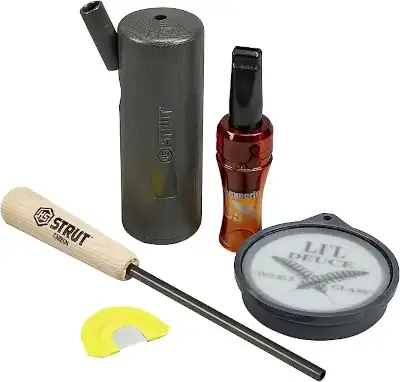
A complete starter kit with a quality slate call, mouth call, and locator calls. It's one of the easiest ways for new turkey hunters to learn multiple calling styles.
Check PriceBest Box Call: Lynch's Fool Proof
There are thousands of options when it comes to turkey hunting box calls. Anywhere from cheap, mass-produced calls, to high end custom calls. I encourage all hunters to buy a custom call if you know someone local. The prices are usually competitive, and you will likely get amazing customer service and support. The support is often worth the price of the call.
However, if you are new to turkey hunting and want something you can order online quickly, Lynch’s Fool Proof Box turkey call is a great place to start. It fits in that middle of the pack range that people often look for. It is not a fancy custom call, but it is made in the USA and the company has been around since 1940.
These calls are hand tuned and feature an offset pivoting paddle. The box is made from mahogany and has a unique one-sided design with a stop on the other side. The Lynch’s Fool Proof turkey box call has been around for literally decades and is widely praised as one of the most realistic sounding box calls.
While this is one of the most popular box calls, it does have a downside in that it is not waterproof. You can search for waterproof box calls, but you may find that they have their own drawbacks and may not have the same sound quality as this.
Why Buy It?
- This is a great sounding box call that is easy to use and has unique features that set it apart from the rest of the box calls on the market.
Pros
- Quality, American made turkey box call
- Excellent sound quality that is easier for all experience levels
- Best value for the money
Cons
- Not waterproof
- Some users have experienced the call cracking along the grain of the wood.
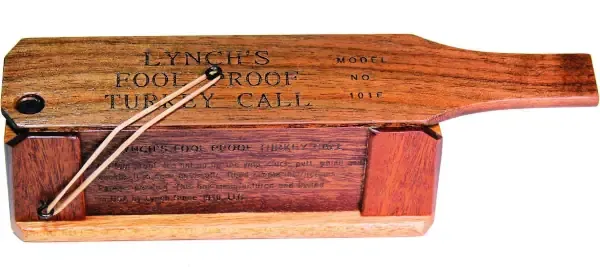
One of the most iconic turkey calls ever made. Easy to master, extremely realistic, and capable of producing loud yelps that reach distant gobblers.
Check PriceBest Slate Call: Woodhaven Cherry Classic
While I personally love the glass friction call from the H.S. Strut combo pack, there are lots of other options when it comes to slate calls. I also use the Knight & Hale White Liar turkey call which is a nice friction call that works better than glass when it is wet out, but that call is no longer available.
Again, I recommend buying from a small call maker that is local if you can, but a solid choice for a turkey hunting slate call is a Woodhaven. One of their more popular models is the Cherry Classic Friction Turkey Call. It comes with a surface conditioning kit, a surface saver lid, and two different types of strikers.
These are made in the USA in Alabama, and are about as close as you can get to a custom call while still picking up an off the shelf option. You will be hard pressed to read a negative review of the sound and versatility of this call, although it is definitely on the pricier side of turkey hunting calls.
Why Buy It?
- The Woodhaven Cherry Classic is a popular turkey hunting slate call because of its sound quality and versatility. It comes from a well-known and respected USA brand and can be easily purchased online.
Pros
- Comes with everything you need for a slate call
- Custom look and feel
- Versatile turkey call
Cons
- One of the most expensive turkey hunting calls from this list
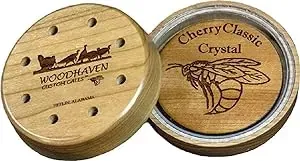
Produces soft purrs, clucks, and convincing yelps with excellent realism. A favorite among experienced turkey hunters.
Check PriceBest Mouth Call: H.S. Strut Fearsome 4
When it comes to mouth calls, my recommendation is quantity. There are so many variations in mouth calls when it comes to how the reed is cut, but at the end of the day, there isn’t a lot of difference in quality between different companies.
Diaphragm calls won’t last forever and need to be replaced fairly regularly. Additionally, as a beginner caller, you will want to experiment with the different reed cuts and styles to find what you like best. These factors point to buying a combo pack as the best place to start.
The H.S. Strut Fearsome 4 is a no-nonsense four pack of turkey hunting mouth calls. It features four different reed styles: The Double D, Cutt’N 2.5, Double Dead, and Power V. Each style has a different sound to it, so try them all and see which one you like best and is the easiest to learn on.
Why Buy It?
- Mouth calls are some of the cheapest turkey hunting calls you can get, and a four pack will give you plenty to test out and learn on.
Pros
- 4 different styles of mouth calls
- Low price
- Small and easily transported
- Leaves your hands free.
Cons
- Difficult to learn
- Doesn’t last forever and needs to be replaced
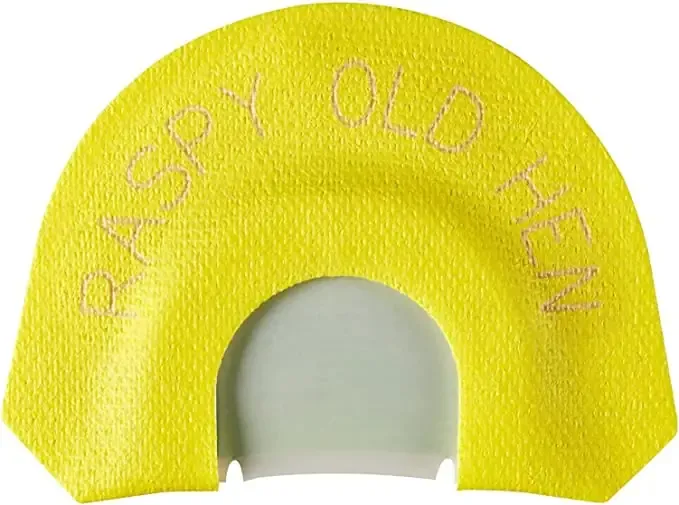
A versatile diaphragm call capable of everything from soft tree yelps to aggressive cutting once you've developed confidence using mouth calls.
Check PriceBest Push Call: H.S. Strut Push Button Yelper
Push button calls often get labeled as a beginner call. They are simple and easy to use but lack the versatility of box and pot calls. You can certainly find expert callers that make better and more versatile sounds from a push button call than I could ever do with my pot call, but that isn’t the norm.
Most people who are looking for a push button call want an easy way to call turkeys quickly, but will likely move on to a box or slate call as they gain experience. You wouldn’t ever need to ‘move on’ but there is something appealing about a more involved method of calling where you have more variability.
That’s why I like to recommend that hunters looking for a push style of turkey call buy a simple yet effective wood call. These are some of the cheapest calls out there and while you can spend more to get a fancy call, most people will be more than happy with the simple, plain call.
The H.S. Strut Push Button Yelper is made from poplar and walnut. It is a simple design that doesn’t have much for bells or whistles. However, it is compact, easy to use, sounds like a turkey, and comes at a very affordable price.
Why Buy It?
- A cheap call that is easily operated with one hand and sounds like a turkey. With a few minutes of practice, you can have the skills needed to call in a turkey.
Pros
- Compact size
- Easy to learn and beginner friendly
- Great value for the price
Cons
- Less technical to use so you may quickly look for a more advanced call after mastering the push button.
- Less versatile than other calls
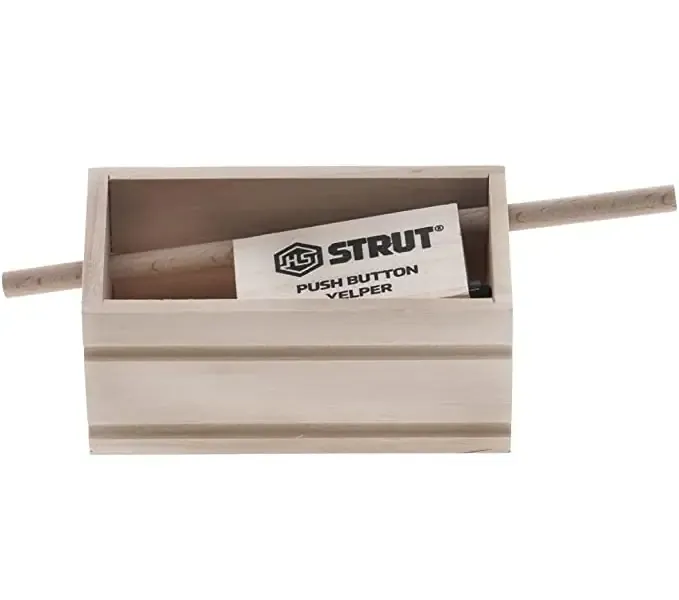
Perfect for hunters who struggle with mouth or friction calls. Simply push the button to create consistent, realistic yelps with almost no learning curve.
Check PriceBest Locator Call: H.S. Strut Hammerin' Crow
Locator calls are an important call type to have for turkey hunting, especially if you like the run and gun style or you are hunting new areas. Old mature toms might not fall for this trick, but locator calls can help you find the area other turkeys are using. Then you can position yourself for a successful hunt on the mature tom.
Some of the most popular locating calls imitate sounds by owls and crows. These are natural sounds that turkeys will shock gobble at during the spring. The key to a good locator call is one that makes a very loud, sharp noise. I think a crow call does a better job at this than an owl call.
This H.S. Strut Hammerin’ Crow call is the same one that comes in the combo kit listed at the top of this article, so you can save some money if you buy the combo. The H.S. Strut call makes a good locator call because it has an adjustable reed, and produces a loud, realistic sounding crow call.
Why Buy It?
- A cheap locating call that is tunable and will sound natural at anytime during the day.
Pros
- Adjustable reed for multiple tones
- Loud and realistic sound
- Durable and compact call
Cons
- Takes some practice to get it to sound right
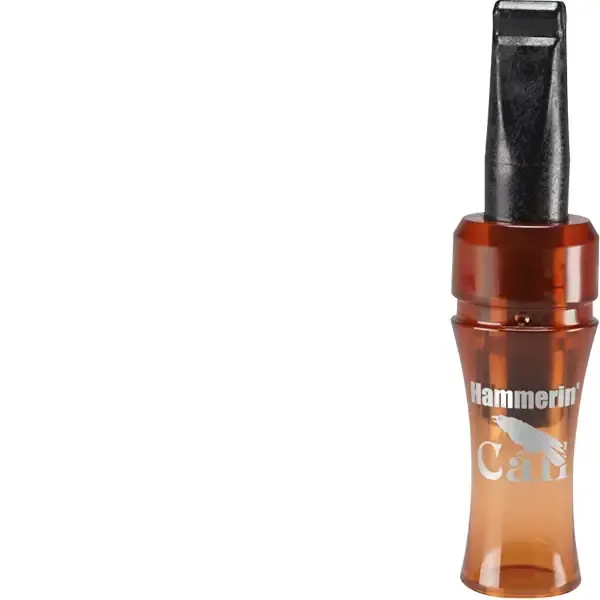
A loud crow call designed to shock gobblers into sounding off without alerting them to your presence, making it easier to pinpoint birds before setup.
Check PriceBest Turkey Hunting Custom Calls: Shop Local
A lot of turkey calls are mass produced. There is nothing wrong with that, but if you want something that sounds different than what everyone else is using, consider buying a custom call.
There are plenty of people that run small businesses or that make turkey calls on the side. You will likely get better support if you need any help learning the call, and you can end up with a nice call that will last you a lifetime.
I want to use this space to showcase some of the amazing custom turkey call makers. Some of the links in this article are affiliate links, meaning I may receive a small commission if you purchase an item (at no additional cost to you). However, all the links below are direct to the call maker, and I receive no compensation for posting them.
If you make turkey calls or know someone that does and want your link included in this list, feel free to let me know.
Why Buy It?
- Support a local small business and get a custom turkey call.
What are the Different Types of Turkey Calls?
There are 5 main types of turkey hunting calls. Each serves a unique purpose, although there is some overlap. The 5 styles of turkey hunting calls are:
- Box Calls: Rectangular box with a paddle
- Friction Calls: Circular pot with a striker
- Mouth calls: Latex reed stretched tight across a frame
- Push and Pull calls: Striker and spring loaded paddle.
- Locator Calls: Sharp sounding call to create a shock gobble.
How a Box Call Works
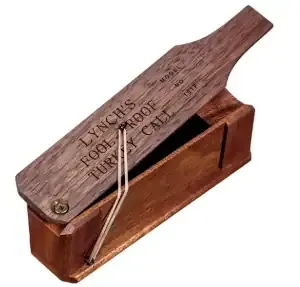
A turkey hunting box call works by creating friction between the paddle and the sides of the wooden box. As the paddle is pulled across the box, it creates a vibration that resonates through the box, producing sound that mimics the yelp of a hen turkey. The vibrations can be adjusted to create sounds that range from high-pitched to low-pitched, allowing hunters to mimic a variety of different turkey vocalizations.
Box Call Pros
Box calls are versatile and can create a wide variety of turkey sounds, all while being easy for a beginner to pick up and make a basic yelp. A quality box call will grow with you as your turkey hunting calling experience increases. They are essential for those early spring days when you need the louder volume to be heard above the wind.
Box Call Cons
There aren’t many cons to a turkey hunting box call. While it can be affected by moisture and changes in temperature, most all other friction type turkey calls will be affected as well. Box calls also tend to be louder, which could be a con if used in the wrong situation. They require both hands to use so you will need a blind or something to hide the movement if there are turkeys nearby.
How a Friction Call Works
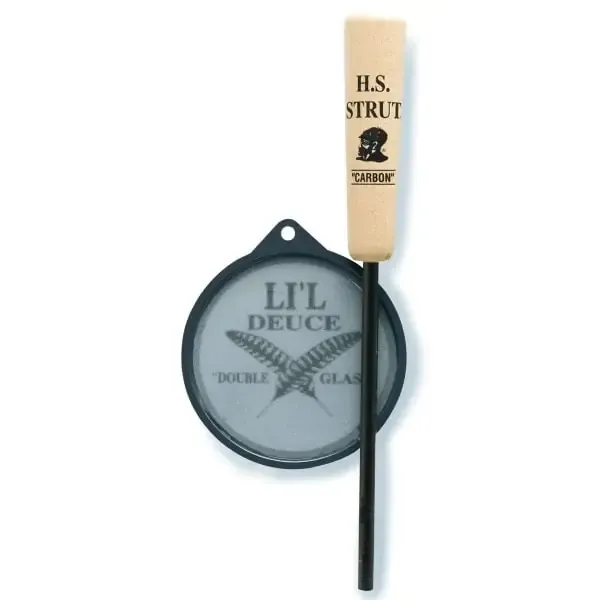
Friction call is a term typically used for a turkey call with a pot and a striker. You will hear these called slate calls, or pot calls. The body is a circular pot typically made from wood or plastic. The striking surface varies, but glass and slate are probably the most common. The striker can be various materials as well and is used to drag across the surface of the call, producing turkey sounds.
Friction Call Pros
Friction calls typically offer more versatility and easier use for beginner turkey hunters than any other call. They are great for soft and subtle early morning calling but can be used as a medium volume call for longer range calling on calm days. I have coaxed more turkeys into range with a simple glass pot call than any other turkey call I own. It is my go-to call whenever I go turkey hunting.
Friction Call Cons
These calls typically don’t produce the loud volume that a box call is capable of. They are also more susceptible to moisture. If the friction surface of the call gets wet, it can be practically useless until it dries out. With a little precaution though you can work around this. I keep my pot call in a pocket during wet weather. My 2021 season turkey was called in with my pot call on a wet and rainy morning.
How a Mouth Call Works
Mouth calls are also referred to as diaphragm calls. These calls work differently from the other types, as they use a latex reed instead of friction. The reed is stretched across a frame covered in plastic. It goes in the roof of your mouth with your tongue lightly against the reed. As you push air between your tongue and the reed, it vibrates and if done correctly, will sound like a turkey.
Mouth Call Pros
Mouth calls are typically the cheapest type of turkey hunting call you can buy. They offer hands free use and can be used to make a wide range of sounds and volumes. For bow hunters, they are an excellent tool because they can be used even after the bow is drawn. Since they don’t rely on friction, these calls can be used the same, even in wet and rainy conditions which is a big plus.
Mouth Call Cons
While they are cheap, these calls can be considered disposable. It is not recommended to keep using the same mouth call year after year, and the latex reed will eventually wear out. Also, diaphragm calls are the most difficult type of turkey call to master. They are versatile, but it will take longer for a beginner to get a realistic sounding basic yelp out of a diaphragm call than the other styles.
How a Push Call Works
A push or pull type turkey call is similar to a box call, except instead of using a paddle, there is a striker that slides up and down as you push on the end of the plunger. It is usually spring loaded, so as you release it, the rod retracts back and is ready to be pushed again. They also are made from various materials, with wood, metal, and plastic being common.
Push Call Pros
These are often marketed as beginner turkey hunting calls but have a spot in any turkey hunters gear list. They are small and easily transported without the call making unwanted noise. They are very easy to use and can be operated with one hand. Push calls can even be mounted to a shotgun and actuated with a cord.
Push Call Cons
The push call doesn’t lend itself to being very versatile. You can certainly learn techniques to change the sound or pitch, such as covering the bottom of the box (the soundboard), or changing the downward pressure on the striker as you push it, but overall, it is probably the least versatile type of call. It also needs to be kept out of the elements just like all the other friction type calls.
How a Locator Call Works
Turkey locating calls produce a loud, sharp sound that can cause a mature tom to shock gobble. If you are out in the morning or evening, you will hear turkeys gobbling after different sounds. It could be an owl or crow, but even a dog barking or a car horn can cause a turkey to gobble. Locating calls imitate natural sounds with the hope of causing a turkey to gobble and alert the hunter to its location.
Locator Call Pros
Locating a turkey is the first step to shooting one. If you are in a new area or are trying to find turkeys in a short time frame, a locator call is a great way to get a turkey to gobble. Locator calls that imitate natural animals in your area can cause the turkey to gobble without any noise that sounds out of place.
Locator Call Cons
Especially on public land, pressured public land turkeys may not gobble after a locator call, especially mid-day. I find that when I am scouting, there are enough crow calls and owl hoots going off naturally that I don’t have any need for a locating call. These calls won’t coax a turkey into range either, they are used purely to try to get a shock gobble from a mature tom.
How to Choose a Turkey Call?
With all of the different options, choosing a turkey call can be a daunting task. Consider these factors before picking your best turkey hunting calls.
- Sound quality (realism and versatility)
- Sound volume
- Practice time to be sufficient
These factors are important and can help guide you to pick the right turkey hunting call. Different calls are often best in different situations and owning multiple types is always recommended as they each serve a purpose.
What is the most realistic and versatile turkey hunting call?
When picking a turkey hunting call, you want one that is realistic and versatile. The pot call, mouth call, and box call are all realistic hunting calls and depending on skill level, they can each be incredibly versatile. So how do you pick what kind to get?
For me, my glass pot call is my most versatile and realistic sounding call. It can make a wide range of turkey sounds with ease, and I find it to be the perfect fit for most of my soft to medium volume calling. But I can’t make a blanket statement that it is the best for all hunters, because a lot of it depends on the skill level of the hunter and the hunting situation.
If you don’t know what to pick between these three types of calls, it really comes down to the sections below. What volume and level of skill do you require for your turkey hunting calls?
What is the loudest type of turkey hunting call?
A box call and a mouth call are going to give you the sound volume you need to call on windy days. In general, the box call is going to be a little louder than mouth call, but both should be sufficient for most circumstances.
However, louder does not always relate to better. There is a fine line. If the turkeys are so far away that they will never even consider coming in your direction, having a louder call isn’t going to help you. But if there is a turkey 200 yards away that can’t hear your call on a windy day, then that isn’t an ideal situation either.
When picking a turkey hunting call, consider if you are going to be primarily looking for turkeys on the roost and then sneaking in close. Or are you stuck in one spot, and you hope to call turkeys to you. I find myself in both of those turkey calling situations regularly, which is why I have both a loud box call and a more subtle pot call.
What is the easiest turkey hunting call to use?
The easiest turkey hunting call to use is going to be the push style turkey call. However, pot calls and box calls are both easy to pick up and make realistic turkey yelps without much time to learn.
The hardest turkey call to use is a mouth call. These reed style diaphragm calls are a little more finicky to even get a basic yelp out of.
If you can devote an afternoon to watching videos on turkey calling and practicing, both the pot call and box call will be good options.
You won’t have them mastered (that takes a lot of time and learning to read the birds to know how to call properly), but you will have a tool that can help you be more successful when turkey hunting.
What is the Best Turkey Hunting Call?
Turkey hunting calls are an important part of any turkey hunter’s gear. Each type of call offers its own unique advantages and disadvantages.
By understanding the different types of turkey calls and how they work, hunters can make an informed decision when choosing the best call for their needs. The best turkey hunting calls recommended in this article cover all different types of calls and are effective and versatile.
The best turkey hunting call is typically going to be a custom call, but for an off the shelf option, it is tough to beat the simplicity, versatility, and price of the H.S. Strut Lil Deuce glass pot call.
Are you new to turkey hunting? Be sure to check out our beginners guide to turkey hunting in the spring. It answers questions like how often and what time should you start calling turkeys, along with other great information for turkey hunting.
Is glass or slate a better turkey call?
Both glass and slate turkey calls have their own unique advantages and disadvantages so there is no clear winner. Glass calls tend to be able to produce a louder, sharper, and higher-pitched sound than slate. However, glass is more affected by moisture. Slate calls typically produce a softer, more mellow tone but will handle dewy mornings better than glass.
The choice between glass and slate comes down to hunter preference, with importance being put on the situation it is used in. I started off with a cheap glass pot call and bought a little more expensive wood and slate pot call a few years later. I still use both regularly.
How to maintain friction Calls?
Maintaining friction calls is important so that they can perform effectively for as long as you use them. General best practices are to keep the call clean, don’t expose them to moisture, and be sure to dry the call if it gets wet before putting it into storage.
Apart from that, friction calls need the surface to be conditioned. You will want to rough up the surface of the call with fine sandpaper or scotch-brite. You can even experiment with using different grits of sandpaper on different parts of the call.
Remember though, you aren’t trying to sand off material. The purpose is to just lightly rough up the surface so the striker has more friction with the call.
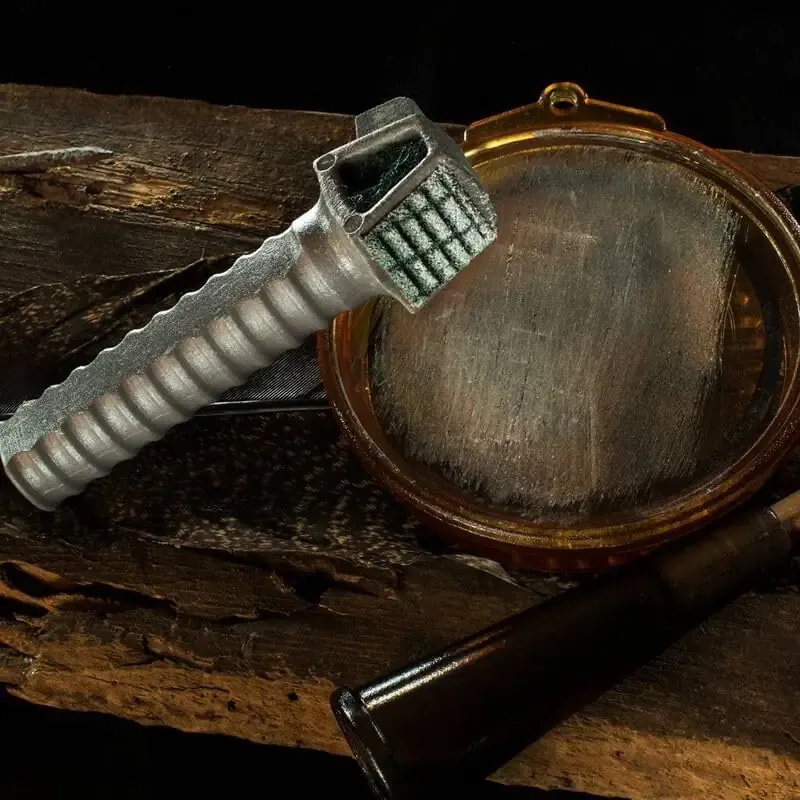
A tool for conditioning slate and other friction style turkey calls.
Check PriceIs owl or crow call better for turkey?
The choice between owl and turkey calls is another one that comes down to personal preference and hunting conditions. Often, you might not know what works best in your area until you try them and find out which call the turkeys are more likely to gobble at.
One thing to consider is that you will typically hear owls at dawn and dusk, while you may hear crows throughout the day. Also, a crow call is typically louder and sharper sounding than an owl call.
I would start with a crow call, but locating calls are generally cheap enough there is no reason not to get both and experiment to find out what works best.
A loud crow call designed to shock gobblers into sounding off without alerting them to your presence, making it easier to pinpoint birds before setup.
Check PriceWhat is an easy turkey call for beginners?
A lot of people will recommend a push button turkey call for beginners because it is easy to use and has a relatively straightforward operation. However, I like to recommend a pot call or a box call for beginners.
Both of these calls take a little more effort to learn up front, but you can easily figure out the basics with an afternoon of practice. As you spend more time learning the calls, you will quickly advance into more complex calling sequences with a box call or a pot call. With a push button type call, these advanced calling sequences will be more challenging.
If you don’t have any turkey calls, this combo kit is a great start and is my top choice for the best turkey hunting calls for beginners. It has an easy to use pot call but also includes a mouth call and locator calls to experiment with, all at a very low price.
A complete starter kit with a quality slate call, mouth call, and locator calls. It's one of the easiest ways for new turkey hunters to learn multiple calling styles.
Check Price